The U.S. Helicopter Safety Team (USHST) released its monthly safety report for November 2026, distributed by the FAA Safety Team on November 16. The report tracks five-year average fatal accident rates per 100,000 flight hours for each operating rule, measured against the team’s goals for 2025 to 2029.
The headline numbers
All figures below are from the USHST report and are fatal accidents per 100,000 hours, for the most recent five-year period (calendar years 2021 to 2025).
- Part 91 (general operations): 0.50, against a goal of 0.73 and a 2018-2022 baseline of 0.81.
- Part 133 (external load): 0.97, against a goal of 1.56 and a baseline of 1.73.
- Part 135 (commuter and on-demand, including air medical): 0.42, against a goal of 0.17 and a baseline of 0.33.
- Part 137 (agricultural): 1.04, against a goal of 1.00 and a baseline of 1.11.
By those numbers, Parts 91 and 133 are already under their targets, Part 137 is close, and Part 135 is above both its goal and its baseline. USHST counts only U.S.-registered civil helicopters operating in the U.S. and its territories, including offshore, and leaves out public aircraft operations.
Safety focus this month
The report highlights Helicopter Safety Enhancement H-SE 2023-05, which deals with training on adverse wind. It calls for awareness material and a training briefing on how wind can affect lift and control at low airspeed. The full report and the safety enhancement details are on ushst.org.
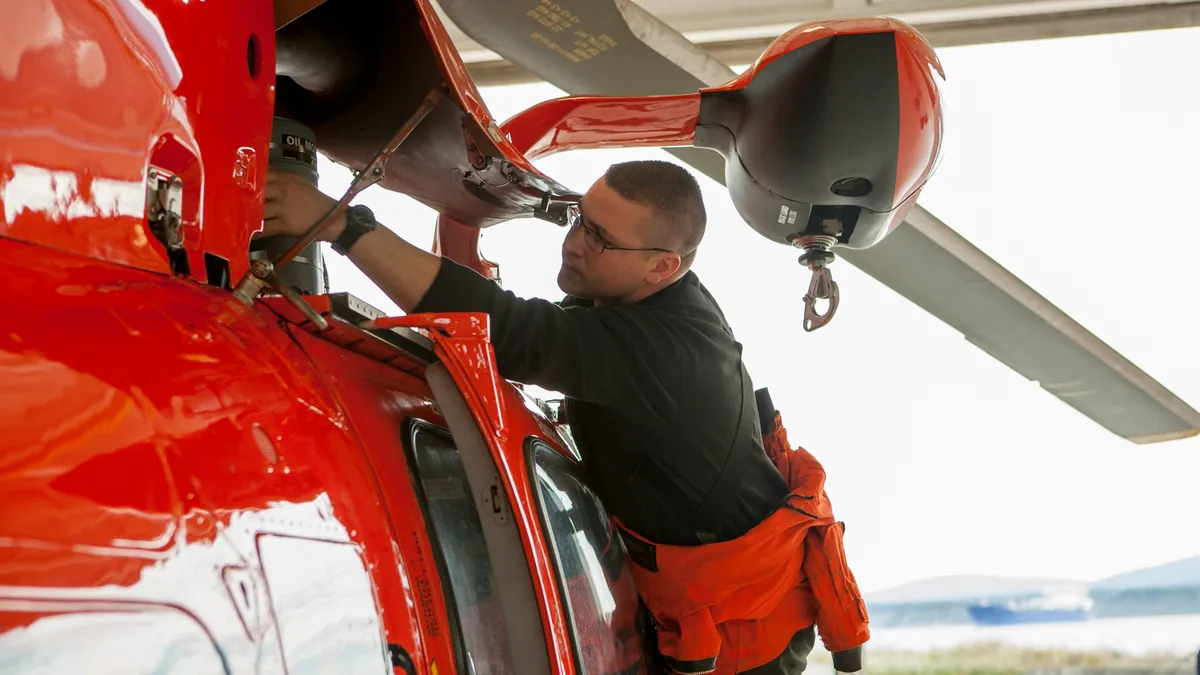
Photo: U.S. Coast Guard / Petty Officer 2nd Class LaNola Stone, U.S. Coast Guard Northwest, via DVIDS. File photo.