Elroy Air and Abu Dhabi-based Barq Group announced on November 16, 2026, that they have signed an aircraft purchase agreement for up to 20 Chaparral cargo aircraft. The companies put the value at up to $70 million for the aircraft alone.
Only part of the deal is firm. Barq has made a binding commitment for five aircraft and paid a $10.25 million initial deposit, which covers half the price of each of those five. The other 15 are production slot reservations backed by deposits, with more pre-delivery payments due under conditions in the agreement. Deliveries are scheduled to start in 2027.
About the aircraft
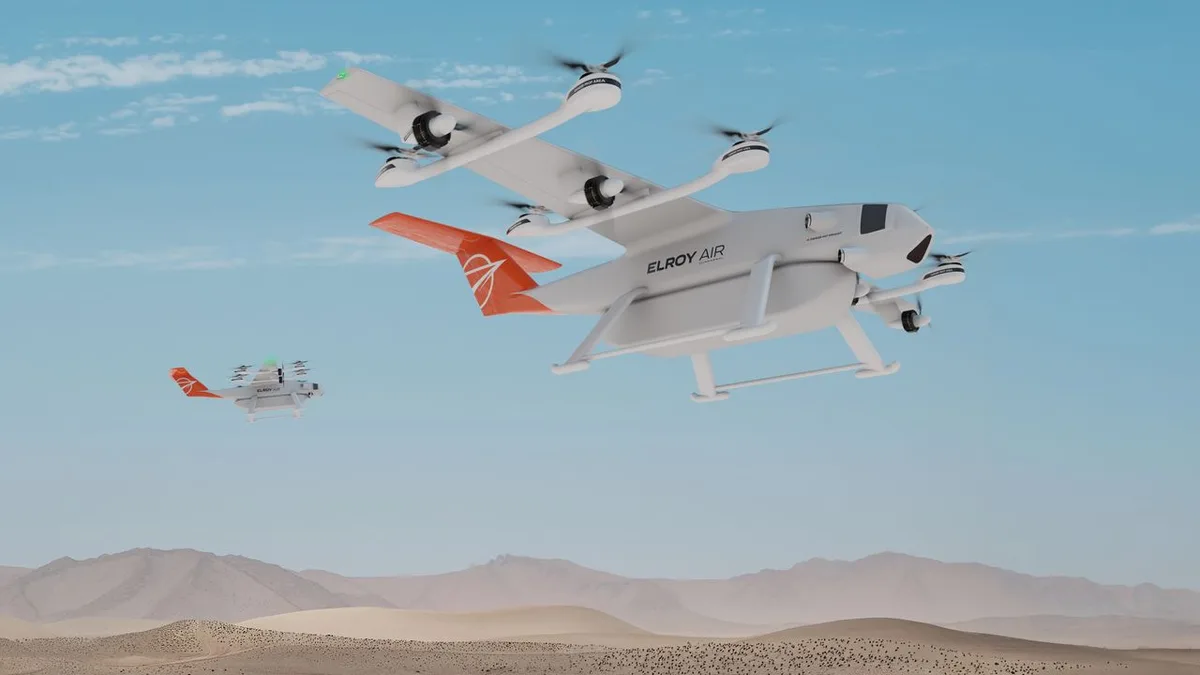
Chaparral is an uncrewed, autonomous vertical-takeoff cargo aircraft with a hybrid-electric powertrain, so it does not need dedicated charging infrastructure. Elroy Air says it can carry up to 500 pounds over up to 450 miles without a runway. Those are company figures for an aircraft that is still in development. Elroy pitches it as a lower-cost option for some cargo jobs now done by helicopters, such as field resupply, offshore energy support and disaster response.
Kratos, Elroy’s exclusive U.S. manufacturer, will build the first 20 aircraft for Barq in Sacramento, California, with production starting in late 2026. The order follows an earlier framework for a proposed $200 million joint venture to build and support Chaparral in Abu Dhabi. That plan still needs final agreements and regulatory approvals.
Image: Elroy Air (press image). Computer rendering of the Chaparral, not a photo of an aircraft in service.